Saturday, 15 March 2014

Coonawarra Wine Region

The Coonawarra region is located about 375 kilometres south west of Adelaide close to the Victorian border.

It is renowned for producing world class red wines especially Cabernet Sauvignon and its secret is the magical marriage of rich red terra rossa soil, limestone, pure underground water and a long cool ripening season for the grapes.

Its a great wine area to visit as the wineries are all located close together basically along a 21 kilometre stretch of the main road.


29 wineries make up the region with 25 having cellar door sales. Whilst this is an area famous for its red wines a number of the wineries also produce white varieties  Patrick of Coonawarra also produces Applelation a very tasty apple cider.


Patrick of Coonawarra


 Hollick Wines


Where to eat

Hollick Wines is the only winery with a restaurant and 5  serve coffee and food.  Upstairs at Hollick is open Wednesday to Sunday for lunch and dinner on Saturday.

Pipers of Penola is an award winning restaurant located in the town of Penola on the southern end of the Coonawarra. Open Tuesday's to Saturday this restaurant is great if you enjoy a formal dinner and quality food.


Pipers of Penola


If you prefer a more relaxed feel  Fodder's changing menu includes wood fired pizza and other meals all using local and fresh produce. Open for lunch and dinner Thursday to Sunday Fodder is located in Coonawarra.


Fodder

Penola Station is another option serving modern international food. This restaurant is open 7 days a week for lunch and dinner in the summer and closed Tuesday during winter. 


Where to stay

There is a range of accommodation in Coonawarra or nearby in Penola and Mount Gambier which is about 30 minutes south. Our choices include:

Coonawarra Country Cottages  all tastefully decorated and furnished these 3 lovely cottages provide comfortable and charming self catering accommodation and 2 have the benefit of large gardens.

Must @ Coonawarra  with stylish and fresh apartments with modern appliances this property is located in Penola a short drive to the Coonwarra wineries.

Highbank Winery Accommodation  has a choice of accommodation including 2 romantic guest retreats - the Cottage and the Villa both have picturesque views of the vines.  

The Barn is located a short distance from Mount Gambier and set in beautiful gardens with an award winning steakhouse. With their award winning Steakhouse and a range of suites spread throughout the gardens its our  first choice when we're touring the area.  


The Barn


Other attractions

The Coonawarra Region is also close to a number of other tourist attractions including:

The Blue Lake Mount Gambier  is located in a volcanic crater. The colour of the water changes from grey to a vivid blue in November each year changing back to grey after March. Its a beautiful scenic spot and a great illustration of how fascinating nature can be.  Nearby are a number of other lakes called the crater lakes.


Blue Lake

Umpherston Sinkhole /Sunken Garden is located in the heart of Mount Gambier. Once a cave the sinkhole was created when the top of a chamber collapsed downwards. The topsoil on the floor of the cave creates a perfect environment for a sunken garden.


Umpherston Sinkhole


The Cave Gardens are a State Heritage Area and also located in the city of Mount Gambier. You can walk down into the caves and view the gardens from a suspended viewing platform. Each night there is a sound and light show which tells of Indigenous Dreamtime stories.


Cave Gardens


Bool Lagoon  is located a short distance to the north of Coonawarra and is visited by up to 150 species of birds many migrating from the Northern Hemisphere. UNESCO have designated the wetlands as a Wetland of International Importance under the Ramsar Convention. 


Bool Lagoon


Heading further north towards Adelaide are the Naracoote Caves. Palaeontologists have been studying the fossils and bones found in the caves for over 30 years and now Naracoote Caves are recognised as one of the world's most important fossil sites. 

There are more than 26 caves in the National Park with a number are open to the public and others maintained for continuing scientific research.  Check tour times and pricing


Naracoote Caves

Wonambi Fossil Centre  


If you don't like to go underground The Wonambi Fossil Centre provides an opportunity to step back in time and discover what Naracoorte was like over 200,000 years ago. The Fossil Centre is a walk-through diorama with life-sized models of extinct animals in their ancient habitats.

Wonambi Fossil Centre


Why not come explore this area with us on a 3 day or 4 day private tour from Melbourne to Adelaide tour 


Sunday, 9 February 2014

Phillip Island Nature Parks

Phillip Island Nature Parks was established to conserve the natural beauty and historic and archaeological history of Phillip Island. 

The Park is part of the UNESCO Western Port Biosphere Reserve with wetlands, woodlands, wildlife sanctuaries and coastal areas. The area is rich in bird life with significant populations of little penguins, shearwaters and hooded plovers and wildlife including koalas, swamp wallabies and Australian fur seals.


Swamp Wallaby

The Park Service manages a number of tourism attractions including the Penguin Parade, Koala Conservation Centre, the Nobbies and Churchill Island Heritage Farms.  The profits generated are used to invest in conservation, research, ecotourism, environmental and education initiatives within the Nature Parks. 

The most cost effective and best way to enjoy the range of activities of the Nature Park is to purchase a 3 Parks Pass as it allows you to attend the Penguin Parade, visit the Koala Conservation Centre and learn about Victoria's early farming history on Churchill Island Heritage Farm.


Penguin Parade

Most people are drawn to Phillip Island to see the iconic Penguin Parade where you can watch the little penguins make their way across the beach heading towards their nesting areas after spending their day hunting in the ocean.


This is a fascinating experience as you watch and wait in anticipation of the sun setting and the little penguins arriving. It often feels like they will never come and then it seems that a sole little penguin emerges from the sea. Maybe this is a scout as shortly others follow. Sometimes they stop and some will scurry back as if they are too frightened to leave the ocean but slowly crowds of them appear and wander into their nesting areas.

At one stage you could sit on the beach in the evening and the penguins would wander past quite close to you.  It was an amazing experience, but as crowds grew the need to protect the penguins and their habitat meant viewing platforms and walkways were constructed. 

Today there are a range of experiences that you can purchase including having a Park Ranger guide you to a private area to view the penguins on the beach (Ultimate Experience) or enjoying the penguins in the comfort of a Sky Box (VIP Experience) where you'll also have fantastic views across the beach and help the Ranger count the penguins as they return for the night. Another option is the Research Tour where a Ranger shows you how researchers collect data and you'll see the weigh bridge where penguins that cross are weighed. You'll also visit the Sky Box before seeing the Penguin Parade from front row seats at the Penguins Plus viewing area.

You can download a free Penguins App which provides interesting insights into the penguins, statistics on their return from the ocean, pictures and a game. 

Koala Conservation Centre

At the  Koala Conservation Centre you can wander along an elevated boardwalk and see these amazing furry mammals in their natural habitat. You can get fairly close and sometimes you may be lucky if one climbs down the trees and settles very close (like the one in this picture). 

You may also see  koalas with a joey (its baby) clinging to its mother. Rangers wander the board walks during the day providing you with an opportunity to ask questions about the koalas and their habitat.

The Visitor Centre is interactive and you can learn all about the koala and purchase gifts from the gift shop.


The Nobbies 

The Nobbies Centre showcases Australian fur seals and the marine life of the Southern Oceans.  From the centre and board walks you can look across to Seal Rocks; a breeding ground for over 20,000 Australian Fur Seals.  

There are binoculars set at strategic points where you can get a closer view across to the Rocks. 

If you want to see the Seals up close its a good idea to organise a boat tour of Seal Rocks from a range of operators. 


Entry to the Nobbies is free and there is a large cafe. information centre and gift shop.


Churchill Island Heritage Farm

Churchill Island Heritage Farm provides insights into what life was like living on a farm in the early 1900’s.  The 57 heactare Island was originally inhabited by the Bunurong people with the first European inhabitants finding remains of canoes and fires.

European settlement started when Lieutenant James Grant sailed the Lady Nelson to the island in 1801. He planted seeds he'd been provided, felled trees and built a hut making this the first European agricultral pursuit in Victoria.


The farmhouse has been beautifully restored and furnished with antiques. There are also a range of interesting outbuildings that give the impression that you’ve travelled back through time. 


You can see a range of farm animals and experience some of the farm activities like shearing, whip cracking and wagon rides.

There are also beautiful views across to the mainland. For more information see our blog on Churchill Island Heritage Farm


Sunday, 12 January 2014

Wildlife on Tour part 2

Swamp Wallaby

The Swamp Wallaby is a small and shy macropod marsupial found in eastern Australia. They're generally loners but will often eat in groups. That's certainly the way we observe them on Phillip Island.  


Like the kangaroo the swamp wallaby carries its young in a pouch. The joey will stay in the pouch for 8 - 9 months and continues to suckle until its around 15 months old.


Swamp Wallaby
Peafowl

Often referred to as peacocks these birds are collective known as peafowl. The male is a peacock and the female a peahen. 


Peafowl love to wander around during the day but at night they like to roost in tall trees for safety.


A majestic pose by this pea fowl on Churchill Island

In Australia peafowl breed in the middle of summer and peacocks fan their decorative feathers in a shimmery dance of courtship. They also display these as a defensive action if  threatened.


Peahens lay up to six eggs per year and the peahen will sit on the nest often with other nesting penhens nearby. When the eggs hatch the chicks have well formed wings and will roost with its mother on a perch fairly quickly.

We see these beautiful birds on Churchill Island and in the Dandenong Ranges. Unfortunately rarely do we get a chance to see them displaying their feathers.

Emus

The Emu is a fascinating bird it's large and flightless bird and can run extremely fast. They have 3 toes and long legs and can be quite dangerous. At 1.5 to 2 metres tall they weigh on average  36 kilograms. Emu's feed on grass, leaves and small insects. They live all over Australia in grasslands.


Emus in Flinders Ranges

Emu's breed in pairs during the summer months of December and January. The females court the male and become more aggressive than males during the courtship phase.   They will mate every day or 2 and every second or third day the female lays one egg. They will lay on average 11 very large dark green and thick-shelled eggs.  The male incubates the egg on the nest which takes 56 days.  The female will sometimes defend the nest or wander elsewhere. Newly hatched chicks are active and can leave the nest within a few days.

We see Emu's in captivity at Healesville Sanctuary but in the wild we come across them in the Grampians and many places whilst travelling in the outback.

Kookaburra

"The kookaburra sits on the old gum tree......" are the words of an Australian nursery rhyme about the kookaburra the largest kingfisher in the world. Known as guuguubarra by the Wiradjuri (Indigenous people)  the name imitates their call and was translated by Europeans to kookaburra. 

They are found right along the east coast and after being introduced to Western Australia in 1898 the kookaburra is also now found in the south west corner of WA


Their laughter is a pleasant sound heard in bushland and some suburbs.  They eat mice, snakes and small reptiles but can be seen stealing food from picnickers in some areas. For instance this was a constant concern when we travelled around Fraser Island.


Sulphur Crested Cockatoo


The Sulphur Crested Cockatoo is an inquisitive and friendly bird and are sometimes kept as pets and taught to ‘talk’. Their white feathers, yellow crest, large black bill and stately walk make them instantly recognisable. 

This Cockatoo is native to Australia, Indonesia and Papua New Guinea. 

\

Sighted in the Grampians


Performing at the Spirits of the Sky show at Healsville Sanctuary

We see the Cockatoo in many places when we're touring.

Parrots

We see a range of parrots whilst on tour. Some are in the wild like the Crimson Rosella and King Parrots we come across along the Great Ocean Road and in the Dandenongs.


Crimson Rosella


King Parrot

Others like this pair are found in the Land of the Parrots exhibit at Healesville Sanctuary where you can hand feel some of the smaller parrots and hear from experts about these colourful birds. You'll see the endangered Orange Bellied Parrot, Regent Parrot and one of my favourite the Red Tailed Black Cockatoo.


Parrot is a common name for birds that belong to the Order Psittaciformes and include cockatoos, parrots, rosellas and lorikeets. These birds love to eat seeds and a number also feed on fruit, nectar and larvae from wood boring insects.


Tasmanian Devil

The Tasmanian Devil is the largest carnivorous marsupial and currently an endangered species. The Devil could once be found on mainland Australia but since pre-European times was confined to Tasmania.

The survival of Tasmanian Devils is threatened by Devil Facial Tumour Disease which causes tumours around the mouth, face and neck.  The disease develops rapidly and is fatal with affected animals dying within six months of the lesions first appearing. 
Unfortunately this cancer is highly is contagious and spread by biting during feeding and mating.  Its estimated that the cancer has spread across more than 60% of Tasmania and has caused a rapid decline in wild Devil populations.


Healesville Sanctuary is one of a number of Zoos that is participating in the Save the Devil Program. At the Sanctuary they breed and manage a disease free population. You'll find lots more information by visiting their enclosure at the Sanctuary including a display of all the Devils that have been born at the Sanctuary since the program began. One thing that fascinated me is that they all have unique markings and the display includes the name and markings of each animal.


At Longhorn YOUnique Tours we've become Extinction Fighters adopting a Tasmanian Devil. You can adopt an animal too for more information see Healesville Sanctuary's website.


We see the Tasmanian Devils at Healesville Sanctuary but you can also see them at  Moonlit Sanctuary and Conservation Park on Mornington Peninsular.  


Tuesday, 31 December 2013

What to do in Australia for FREE

Maximising what you see whilst on holidays is always a balancing act between having enough time and money to experience it all. While I can't assist with time here's a series of blogs that provide insights into what you can do in each of our capital cities for free.


With a population of 1 million people Adelaide is the capital city of South Australia. The Adelaide HIlls, outback South Australia and wine regions are within easy reach. 

Whilst staying in Adelaide here's some ideas on what you can do for free.


Brisbane is the capital city of Queensland and another fantastic city to visit and the weather makes it possible to enjoy activities pretty much all year round.

The city is located alongside the Brisbane River and there are walkways that follow the river that you can wander along and enjoy the cafes, restaurants and river views. 


One of the great things about visiting our nation's capital city - Canberra is the fact that many attractions are free.


Darwin is the capital city of the Northern Territory a sophisticated city that retains its relaxed charm.  Here are some ideas of what to do in Darwin for free.


Melbourne is the capital city of Victoria and has some of the best restaurants and coffee in Australia. The city is a regular winner of the Worlds best city to live in; an assessment we certainly agree with! 

There are loads of things to do in Melbourne for free depending on what interests you.


Perth is the capital city of Western Australia and located on the shores of the Swan River. With a population of approx 1.9 million people the city is a vibrant centre of activity particularly for the resources industry.

Whilst there are many beautiful beaches to enjoy nearby this blog focuses on other activities that you can do for free. 


Sydney is the capital city of New South Wales and home to the iconic Sydney Harbour Bridge and Sydney Opera House.

Whilst Sydney is sometimes seen as an expensive destination by many there also lots of free places to visit or activities to enjoy.


Monday, 30 December 2013

Adelaide for free

With a population of 1 million people Adelaide is the capital city of South Australia. The Adelaide HIlls, outback South Australia and wine regions are within easy reach.

Free Transport

A free city loop bus known as Route 99C is available and runs every day. Check timetables as times change depending on the day of the week.

There are also 2 free trams - the City Tram runs between South Terrace and the Entertainment Centre and the Jetty Road Glenelg tram runs between Brighton Road and Moseley Square.

South Australia Museum

The South Australian Museum has a range of permanent displays showcasing South Australia's natural and cultural heritage. These include Ancient Egypt, Aboriginal Australia, Ediacara Fossils, Megafauna, Minerals and Meteorites, Opal Fossils, Mawson, Pacific Cultures, South Australia Biodiversity, Whales and Dolphins and World Mammals. 

There are also changing exhibits which may require payment of entry fees.


The Museum is open every day from 10 a.m. to 5 p.m. (opening at 12 noon on ANZAC Day). Closed on Good Friday and Christmas Day.


The Migration Museum provides insights into the stories of the diverse range of individual and communities that make up the people of South Australia.

There are a number of defined collections. The migration stories collection includes textiles and documents and the Museum also houses the State Weapons Collection and the Historical Relics Collection.  

Open Monday to Friday from 10 a.m. to 5 p.m. and weekends and public holidays 1 p.m. to 5 p.m. Closed Christmas Day and Good Friday.

These 16 hectare gardens are located in the heart of the city and feature a stunning collection of Australia natives, exotics and ornamental plants.

The Gardens feature the SA Water Mediterranean Garden with 3 elements that tell the story of Mediterranean plants, an International Rose Garden with its range of colours and beautiful scents.  

The Santos Museum of Economic Botany; the last purpose built colonial museum which features high ceilings and ornate Victorian detail and displaying touring and permanent collections. The Amazon Waterlily Pavilion; a glass palace for the Victoria Amazonica waterlily, the Australian Native Garden showcasing the use of Australian natives and the elegant curves of the Bicentennial Conservatory and much more.


Ducks, swans, pigeons and other wildlife can be found in the Gardens. Friends of the Botanical Gardens provide a free guided walking tour which leaves from Schomburgk Pavilion at 10.30 daily except for Christmas Day and Good Friday.

Admission is free and opening times vary so check the website for more information.

Rose Gardens Walking Trail

With over 5 million roses under cultivation in South Australia and a rose named after the City of Adelaide roses are special to the city. There are rose gardens scattered across the city and a rose garden walking trail has been developed to explore their beauty. Spring is the best time to visit.

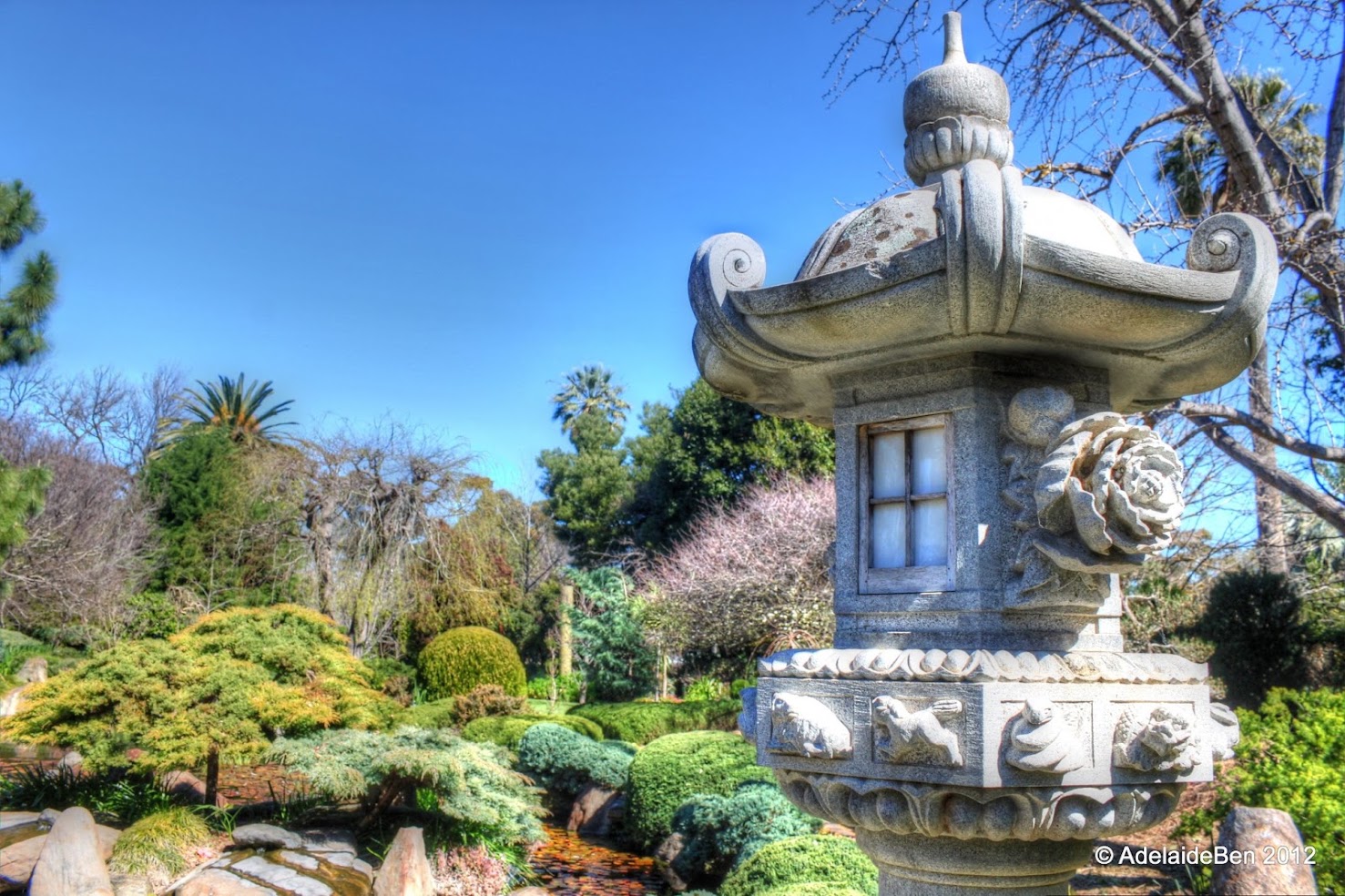
Himeji Garden

These Japanese inspired gardens celebrate Adelaide's sister city Himeji in Japan. The gardens were established in 1985 and  are a popular destination for quiet reflection or just to wander and explore their tranquillity and beauty.


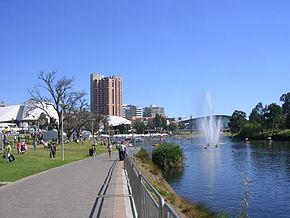
River Torrens Linear Park Trail

You can cycle, walk or jog this trail which runs right through the city centre. The trail passes the Adelaide Festival Centre, Adelaide Convention Centre and the Adelaide Zoo.


Join a free tour of the Adelaide Town Hall which was hailed as the "largest municipal building south of the Equator" in 1866 when it opened. Tours are conducted  on Mondays at 10.30 a.m.


The Art Gallery of SA has a huge collection of Australian, European, North American and Asian works of art. The collection includes paintings, sculptures, prints, drawings, textiles, ceramics, photographs, metalwork, jewellery and furniture.

Open daily 10 a.m. to 5 p.m. except for Christmas Day. Entry is free except for special exhibitions.


Public Art

There is a range of public art throughout the city. A few that quirked my interest...


Is a black granite sculpture located at the front of the South Australian Museum. The 14 pieces have been designed in an egg shape evoking the fossilised bones of a marine reptile displayed in the Museum.


4 bronze pigs in various poses are located in Rundle Mall. The pigs were named Truffles, Oliver, Horatio and Augusta after a public poll.


A bronze sculpture, aptly name, is another quaint piece located in Rundle Mall.

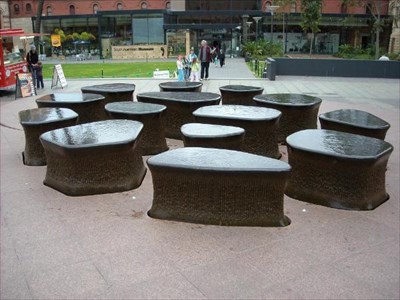
Lie of the Land

Made from Kanmantoo Slate and consisting of 25 sculptural stone structures this interesting piece is located on Sir Donald Bradman Drive.


Tandanya National Aboriginal Cultural Institute

If you're interested in Aboriginal and Torres Strait Islander culture you should visit Tandanya where you can  experience contemporary and traditional  art, culture, history and heritage. The centre has a gallery and various displays and exhibitions. 


Open 7 days a week from 10 a.m. to 5 p.m. Closed Good Friday, Christmas Day and New Years Day.

Entry into the Gallery is free a $5 (adult) and $3 (children) entry applies to the cultural performance held at 12 noon Tuesday to Sunday.


Adelaide Festival

The Adelaide Festival which runs from late February to mid March has a number of free events listed for 2014. Check out their website for more information if you're visiting during that time. 


The National Wine Centre located on the edge of the Botanical Gardens showcases the Australian wine industry. With its eye-catching architecture, wine discovery journey and cellar door tastings. Its worth a visit.

The Centre is open  Monay to Sunday 9 a.m. to 5 p.m. Closed Good Friday, Christmas Day, Boxing Day and New Years Day.


Visit Parliament House and see where the decisions of South Australia's Government are made. Entry to the public gallery in both the House of Assembly and Legislative Council is free and open to visitors when Parliament is sitting.


This historic Cemetery dates back to European settlement and its endless rows of 19th century marble and slate headstones mark the graves of leading political, religious social and business people.