Friday, 23 March 2012

Grampians National Park

The Grampians are a rugged and ancient mountain range that appear to rise out of the surrounding plains. Also known as Gariwerd  the area is steeped in Aboriginal history. With a wide range of wildlife and a stunning array of wildflowers, particularly in the spring, the area is very popular with holiday makers.

You can travel to the Grampians from Melbourne via Halls Gap or Dunkeld  both of which are around 3 hours travel time.  Halls Gap is the larger town and provides the most direct access to the Grampians. It also has an extensive range of accommodation, restaurants and a range of other attractions. Dunkeld has become popular in recent years due to the Royal Mail Hotel's reputation for amazing food and accommodation. Approaching the Grampians from this direction also provides some stunning views of the mountains.


Grampians from  the  Dunkeld Grampians Road
You get a sense of how ancient the mountains are as you gaze out across the area from a number of lookouts and see the region laid out before you as if its nature's own magnificent canvas.  I particularly love visiting during the winter months and waking up in Halls Gap to see the mountains rising out of the early morning fog .

There are a number of 4WD track or you can experience the area close up by bushwalking the extensive network of walking tracks throughout the National Park. Walks range from short to multi day walks and from easy to difficult. 


The Balconies

The area is also popular for rock climbing particularly Mt Arapiles which is said to have some of Victoria's best climbs. If you're not experienced at rock climbing you can learn to climb, join a group or hire a guide.  Arapiles Climbing Guide


View across the Grampians from Barokalookout

The remains of Heatherlie Quarry are an interesting look back on the European History of the area. Many of Melbourne's great buildings including Parliment House have been built with sandstone from the Heatherlie Quarry which is listed as a site of historical significance by the National Trust.


At the Quarry you can explore wokers cottages, old equipment, railway sidings and see some of the partly quarried rock walls. 


There are a number of waterfalls in the Grampians National Park including Silverband Falls which is located a short drive from Halls Gap.  Leaving your car at the car park you can access the falls themselves via an easy walk of approx 20 minutes. The area around the falls suffered significant damage during floods in early 2011 and hopefully natural regrowth will  ensure it is returned to its former glory shortly.


Silverband Falls
MacKenzie Falls is a lovely waterfall that can be seen from a viewing platform located a short walk from the car park. You can also normally walk to the base of the falls, where this photograph was taken, via a steep staircase but access is currenlty closed due to the infrastructure suffering extensive flood damage. 


Mackenzie Falls

At the Brambuk National Park and Cultural Centre you will find the Gariwerd dreaming theatre and be able to watch a film depicting the Gariwerd Creation Story. You can also explore the interpretive displays, participate in workshops or book a tour with a Cultural Ranger .

There is also a cafe that serves bush tucker and a range of other snacks and a shop that sells a wide selction of gifts, maps, bush tucker and books. 


To the Jardwadjali and Djab wurrung people Gariwerd (the Grampians) are central to their creation stories. Recent investigations have revealed Aboriginals have inhabited the region for up to 32,000 years.


Aboriginal Rock Art
Tourism Victoria

It is also said that up to 70% of Indigenous rock art in Victoria is in this region with well over 100 sites identified. Only a few are accessible to visitors.


Aboriginal Rock Art
Southern Grampians Shire

The park has an extensive range of wildlife. One of the most popular are kanagroos and wallabies  who greet most people in the mornings as they graze in the camping grounds and areas surrounding and within the towns.  


Kangaroos in the area surrounding Brambuk


A surprise sighting of deer in the Grampians


Sunday, 11 March 2012

Dandenong Ranges


The Dandenong Ranges are less than an hour’s drive from Melbourne and the gateway to an amazing experience which includes towering mountain ash forest, lush fern gullies, stunning gardens, quaint villages and a ride on a 100 year old steam train. Birdlife, wildlife, cafes and restaurants abound in the Dandenongs making it attractive for nature lovers and tourists alike.
The area has been popular with day trippers since the late 1800’s and was formed into the Dandenong Ranges National Park in 1987. The NP covers an area of 3215 hectares and has some 250 kilometres of walking trails.


Formed from a volcano eruption more than 30 million years ago the mountain range is a series of rolling hills now covered by temperate rainforest. After European settlement the tall timbers of the forest were sought after and a number of timber camps were established in the mid to late 1800’s. In the early days timber was taken out of the ranges by bullock teams.

During the depression of the 1890’s the Government allocated 10 acre farmlets to poverty stricken city folk on the basis that they cleared and farmed the land and lived there for 8 months of a year. Clearing the forest by hand was a back breaking job and I assume many didn't survive the hardships. 

Prior to European settlement the Dandenongs were on the boundary of the lands of the Wurundjeri and Bunurong people. The foothills provided a rich source of food and medicines. To find out  more about Australia’s Indigenous Culture.
You can also read some interesting dreamtime stories on the Emerald Primary School’s history of Emerald site. 
Gardens

There are a range of beautiful gardens to enjoy in the Dandenong Ranges these include:
William Ricketts Sanctuary

Amongst the beautiful bushland of the Dandenong Ranges are clay sculptures of aboriginal people and native wildlife. William Ricketts blog  


The Sanctuary is open daily from 10:00am to 4:30pm daily (except Christmas Day).

A short drive from the township of Olinda this garden is internationally acclaimed for its rhododendrons and stunning views across the Dandenongs and Yarra Valley.  Set on 40 hectares the gardens also have azaleas, camellias, cherries and daffodils ensuring a colourful array whenever you visit.
The gardens have a gift shop that stocks a wide variety of items. There is also a cafe which operates during the spring months only.
Operated by Parks Victoria the gardens are open from 10 a.m. to 5 p.m. daily except for Christmas day. 
Alfred Nicholas Gardens

With a mix of native and exotic trees, picturesque waterfalls and an ornamental lake these stunning gardens are part of the Burnham Beeches Estate. Nicholas, who developed the Aspro formula with his brother, travelled throughout Victoria and to other parts of the world to find established trees for the garden. 
Kookaburras, king parrots and a range of rosellas are often seen in the gardens.


Now operated by Parks Victoria the gardens are open 10 a.m. to 5 p.m. daily except for Christmas day.
George Tindale Memorial Gardens

Established by George and Ruth Tindale the gardens have a collection of rare and exotic plants and flowers set amongst tall mountain ash forest.  Ruth continued to work on the gardens after George died and her flair as an artist is evident in the walks and sculptures throughout the park.


Covering 2.4 hectares the gardens are now managed by Parks Victoria.
Mount Dandenong Arboretum

Set on 16 hectares the Arboretum has a collection of deciduous trees and conifers from around the world.  Eight specimens are listed on the National Trusts Significant Tree Register. You can now download an iPhone app from the National Trust Trust Trees

R.J. Hamer Arboretum

Set on 120 hectares the Arboretum has stunning views and numerous walking trails set amongst a collection of liquid ambers, maples and deciduous conifers.

Spring Festival      
Showcasing the best of the gardens the Spring Festival includes a range of open gardens, various flower and garden festivals, tours,, lectures and food and wine events.

Other attractions
Puffing Billy

Puffing Billy is one of the most popular attractions in the Dandenong Ranges with children and adults alike enjoying a ride through the Ranges on this 100 year old steam train.  Running on a narrow gauge heritage steam railway the Puffing Billy runs from Belgrave to Gembrook.


There are a range of stops along the journey including Lakeside which is a popular stop for a picnic or paddle boat ride on Emerald Lake.  A range of dining options can also be included on some trips.
Train services run each day but on a limited timetable so make sure you check times before travelling to the station. For information on timetable and fares.


The Sky High has a number of viewing platforms with stunning views of Melbourne, the Morning Peninsula, Port Phillip Bay and the You Yangs.  There is a cafe, restaurant and conference centre amoungst the extensive and well kept gardens which include a “secret garden”, English gardens and forest walks.


View from Sky High on a misty day

Popular with families as a picnic area there is a small fee charged on entry. (Currently $5 per car)

Now managed by Parks Victoria the area is open Monday to Friday 9 a.m.  to 10 p.m. and weekends 8 a.m. to 10 p.m.

Walking trails
There are a range of walking trails from leisurely walks to energetic hikes available throughout the Dandenongs.
Kokoda Memorial Track

Named in honour of the Kokoda Track in New Guinea this steep 1,000 step climb is a popular destination for hikers.  The climb is a jungle like experience dotted with plaques providing snippets of the history of the trials and tribulations of Australian soldiers and their allies at the hands of their Japanese captors.
In recent years the Memorial Track has been used as a training ground for people intending on visiting Kokoda and following in the footsteps of Australian diggers.
Sherbrooke Falls Trail
A walk of 1.2 kilometres this is an easy walk on a flat track through mountain ash and sassafras some dating back more than 200 years.
This 17 kilometre track meanders across the cool and clear waters of Woori Yallock, Menzies and Sassafras Creeks. You will pass through the temperate rainforest of the Dandenongs including fern filled gullies, towering mountain ash on boardwalks and across bridges.

One of the many picnic areas found along the walking trails

1 or 2 day tours of the Dandenongs


Saturday, 11 February 2012

Great Ocean Road

The Great Ocean Road is recognised as one of the world's best drives. Along its length are stunning coastal views, lovely seaside towns, the beautiful  and ancient rainforests of the Otway Ranges and a range of wildlife.


View of the Great Ocean Road from Teddy's lookout Lorne

Before the road was built most of the towns along the coast only had the sea as their link to Melbourne and Geelong.  From Lorne the coach road went through dense bush to Winchelsea where it met the rail line.

The idea for a road was around since 1864 but it only came about at the end of World War 1 when it was thought it would be a way to provide employment to soldiers returning from the war. 3,000 ex ”diggers” were employed to build the road and it was built as a memorial to those that died in the conflict.


Great Ocean Memorial Arch

Surveying began in 1918 and construction began in 1919 and finished in 1932. By 1922 the Eastern View to Lorne section was completed and the Lorne to Apollo Bay and Anglesea to Lorne sections were finished in 1932. The road is 243kms in total today.
The most amazing thing about the road is that it was built by hand with pick and shovel and the story goes that no-one died in an accident during construction.


Torquay is a popular seaside town with holiday makers and is the start of the Great Ocean Road. It was originally occupied by the Wathaurong people until white settlement occurred around 1871, before then picnickers visited the area from about 1860.

In 1891 the Joseph Scammell was shipwrecked off Torquay and her anchors are on display at front beach and the boat ramp. The surf life saving club opened in 1946 and is considered to be the oldest and largest club in Victoria. We've been lucky enough to see whales frolicking here as they make their way home after mating in the Southern Ocean. 

Due to its proximity to Melbourne Torquay has grown substantially and now has a number of golf courses and hotels including Peppers adjacent to the Sands Golf Resort and the Crowne Plaza. There are a range of restaurants, cafes and shops including a large and popular range of surf clothing outlets.


Torquay beach near the Surf Life Saving Club

Bells Beach is tucked away off the main road and is the site of the world's longest running Surf Carnival Bells Beach was originally part of farmland owned by a man called Bell and this was one of the best private beaches around. The Carnival is run every Easter and attracts competitors from all over the world.

Bells was also where the final scene of the movie Point Break was set although to the disappointment of a lot of fans it wasn’t actually filmed here.


The beach at Point Addis

Returning to the main road Anglesea is the next town where in the early 1900’s beach boxes lined the river bank and the dunes along the beach. The town started to grow in 1919 with the building of the Great Ocean Road. Today it still retains much of its village atmosphere and with patrolled surf and swimming beaches and the Anglesea River running through town there are lots of options for enjoying the water or strolling along the walkways along the river bank. 

Anglesea River
Anglesea has a history of fires with major fires occurring in 1966 and 1982 but by far the worst were the Ash Wednesday fires on 16th February 1983 when over 140 houses and several lives were lost. In the decades since the bush has regrown and the animals have returned.


Kanagroos draw tourists to the Angelsea Golf Course

At Aireys Inlet Split Point Lighthouse built in 1890 became a welcome relief for sailors trying to navigate the treacherous waters between Victoria and Tasmania. 

As with Anglesea and many other areas in Victoria the Ash Wednesday fires were devastating in Aireys Inlet, in fact they were worse here than most other places, practically wiping out the town, destroying over 170 houses. The town has been rebuilt and like most towns along the Great Ocean Road tourism is their main industry.

a la grecque is one of the few restaurants in Aireys Inlets. There is a cafe located near the lighthouse which is said to be famous for its scones.


Split Point Lighthouse

Lorne is situated on Louttit Bay, named after a Captain Louttit who sought shelter there in 1841 whilst retrieving cargo from a nearby shipwreck. Timber cutting started int he Otway Ranges and sawmills were established and tramlines ran out of the bush down onto the beach were the timber was transferred to ships and taken to Geelong or Melbourne.
The town has a number of historic buildings including the Grand Pacific Hotel opened in 1879 and the Lorne Hotel which opened in 1876 along with construction of the pier.

Lorne has a population of around 1,000 permanent residents but every New Years Eve this swells to around 13,000 and over the first weekend in January up to 20,000 people will come to watch around 4,000 compete in the Pier to Pub swim race. This is described in the Guinness Book of Records as the world’s largest organized ocean swim.

Lorne has some of the largest accomodation providers along the coast including the Cumberland Lorne Resort, Mantra Erskine House and The Grand Pacific.

It also has a range of restaurants, cafes and shops. Qdos Arts Gallery located high on the hill behind Lorne has a gallery, cafe and sculpture park.
A great place to view the ocean and the Great Ocean Road is Teddy’s Lookout which is named after a local ranger who used to go up there to look for stray cattle. The rotunda dates from the 1880’s.
Kennett River is a small settlement between Lorne and Apollo Bay and a popular spot for tourists to stop and look for Koalas and Native Birds.


Birds at Kennett River


Koala at Kennett River
Apollo Bay seems to be the natural mid point along the Great Ocean Road. You can find out more about it on our  Apollo Bay blog

The Great Ocean Road starts to wind through the rainforest of the Otways before coming back to the coast and onto one of the most popular sights of the journey the 12 Apostles


On the beach at Gibsons Steps


The 12 Apostles like many of the strucutres along this part of the coasline show how the neverending force of the Southern Ocean carves the coastline over time.

Loch Ard Gorge was named after the clipper Loch Ard which was wrecked on Mutton Bird Island in1878 after a 3 month journey from England. Only two of the fifty one on board survived. The gorge has been the location for scenes from The Pirate Movie in 1982 and the 1992 TV series Journey to the Center of The Earth.


.

Loch Ard Gorge

Port Campbell is a lovely sheltered town named after Captain Alexander Campbell, a whaler who sought shelter there during a storm in the 1840’s. Even today it is still the only sheltered refuge between Apollo Bay and Warrnambool.

In 1882 the town became famous when someone decided that, with people worried (unjustly) about a Russian invasion, he would spread rumors of a so-called invasion and he told The Age newspaper that their fleet was ready to attack. Some other newspapers in Melbourne went as far as to report massacres and thousands of Russian troops making their way towards Melbourne. Finally someone sailed to Port Campbell to find out what was happening and instead found out the truth.

.
Port Campbell from a helicopter

London Bridge was a double span arch and resembled its namesake but in Janury 1990  the arch closest to the mainland collapsed leaving two people stranded out on the other arch. Some people now refer to it as the London Arch.

Saturday, 28 January 2012

Phillip Island

Phillip Island is located approx 1.5 hours drive from Melbourne and is famous for its beaches, motor racing circuit and wildlife.

Penguin Parade

The highlight of any visit to the Island is the iconic Penguin Parade where you can watch the little penguins make their way across the beach heading towards their nesting areas after spending their day hunting in the ocean.


Penguin Parade
Tourism Victoria


Once upon a time, you could sit on the beach in the evening and the penguins would wander past quite close to you.  It was an amazing experience, but as crowds grew the need to protect the penguins and their habitat meant viewing platforms and walkways were constructed. Today there are a range of experiences that you can purchase including having a Park Ranger guide you to a private area to view the penguins on the beach (Ultimate Experience) or enjoying the penguins in the comfort of a Sky Box (VIP Experience) where you’ll also have fantastic views across the beach and help the Ranger count the penguins as they return for the night.


Sky Box
Phillip Island Nature Parks
Koala Conservation Centre

The Koala Conservation Centre is set up to show you how koalas live in the wild with very little human intervention. You can wander along an elevated boardwalk and see these amazing furry mammals in their natural habitat and have the opportunity to ask questions of the Rangers who manage the Centre.

There is also an interactive Visitor Centre where you can learn about the koala and purchase gifts from the gift shop.


Koala Conservation Centre

Churchill Island Heritage Farm

Churchill Island Heritage Farm provides insights into what life was like living on a farm in the early 1900’s. The farmhouse has been beautifully restored and there are a range of interesting outbuildings that give the impression that you’ve travelled back through time. You can also see a range of farm animals and beautiful views across to the mainland. For more information see our blog on Churchill Island Heritage Farm


Parks Victoria manage these 3 tourist attractions and you can purchase tickets individually or buy a 3 Parks pass which provides great value. See Phillip Island Nature Parks

Nobbies


The Nobbies Centre showcases Australian fur seals and the marine life of the Southern Oceans. Entry is free and there is a large cafe. information centre and gift shop. From the centre and boardwalks you can look across to Seal Rocks; a breeding ground for over 20,000 Australian Fur Seals.  

If you want to see the Seals up close you can organise a boat tour of Seal Rocks from a range of operators.


This attraction provides activities for people of all ages. Fish for a trout in the outdoor or indoor ponds and you can take your fish home with you or have it cooked and eat it for lunch. 

Take a walk around the Bush Tucker Trail and learn about the 22 varieties of bush tucker that are grown on the property. Paul Mannix and his family have re-vegetated the area with 22,000 trees which has converted pastures into an amazing natural bushland wonderland.


Or take a Tea Trail walk and pick leaves that you can later drink as tea with some lovely home-made wattleseed  scones. The licensed cafe also sells a range of products that are made from   the bush tucker or trout caught on the lake. We enjoyed a delicious smoked trout and smoked trout dip with some mountain pepper and chilli chutney.


Beaches 

Phillip Island has a range of beaches suitable for swimming, fishing and surfing.  Woolamai is the longest beach on the Island and the site of the only Surf Life Saving Club.  When visiting the beaches you should be aware that Australian beaches can be dangerous so you should always swim on a patrolled beach and between the flags. To learn more about  beach safety.


Cowes Beach

Cowes is a relatively calm beach and popular with families. Cowes is also home to the Island's main shopping strip with a range of specialty stores, supermarkets, pubs, restaurants and other stores.


Smiths Beach

Smiths Beach caters for both sufers and families and is located between Woolamai and Cowes.

 
Beach near Forrest Caves

Forrest Caves are part of eroding red basalt cliffs located between Woolamai and Surf Beach. You can wander through the caves at low tide and swim on the adjacent beach care should be taken as high waves and rips are common. 

Newhaven and San Remo (on the mainland) are popular for fishing.

National Vietnam Veterans Musuem

The Island is also home to the National Vietnam Veterans Musuem which has displays of photographs, memorabilia, vehicles and aircraft that detail the history of Australia's involvement in the Vietnam War from 1962 to 1972.


Phillip Island Racing Circuit

Celebrating 60 years in 2012 the Phillip Island Racing Circuit is home to car racing and motor bike racing drawing large crowds to the Island for major events.

Other regular activities include go carts, hot laps and team building. To learn more Phillip Island Racing Circuit

Phillip Island Chocolate Factory

Another popular attraction is Panny's Phillip Island Chocolate Factory where you can buy or taste Belgium chocolates and learn about chocolates in the Amazing World of Chocolates.


Phillip Island Wildlife Park

The Phillip Island Wildlife Park is set over 60 acres and home to more than 100 species of animals and birds. Its a little tired and in need of work but popular with visitors as you can feed a range of animals as you wander through the park.


Tuesday, 27 December 2011

Churchill Island Heritage Farm

Churchill Island is a working Heritage Farm that  can be accessed from Phillip Island.  The 57 heactare Island was originally inhabited by the Bunurong people with the first European inhabitants finding remains of canoes and fires.

European settlement started when Lieutenant James Grant sailed the Lady Nelson to the island in 1801. He planted seeds he'd been provided, felled trees and built a hut making this the first European agricultral pursuit in Victoria.

The Island  forms part of the Churchill Island Marine National Park and is maintained by Parks Victoria. From an Indigenous cultural perspective Aborigianl middens and the remains of stone foundations are also preserved  with  the area of Western Port surrounding the island listed under the Convention on Wetlands of International Importance (RAMSAR Convention).


One of the sculptures in the garden
The gardens are extensive and  well maintained. They include some interesting sculptures, Norfolk Pines, ancient Moonah trees, wetlands and a range of plants and herbs. You can wander around the gardens, house and farm buildings on a range of paths.  The grade is very easy.


A cottage

Kitchen garden

In the kitchen garden

There are also extensive walking tracks including through the wetlands. For more information on walking the Island see Walks Victoria


The main house

James Amess, a former mayor of Melbourne, purchased the island  in 1872 and built the substantial home that still stands today.  

Informal dining room

The main house has been restored and provides a fantastic glimpse into what life was like for the well to do early European settler.

Bedroom in the main house

Antique spinning wheel


One of the workshops

Black faced sheep

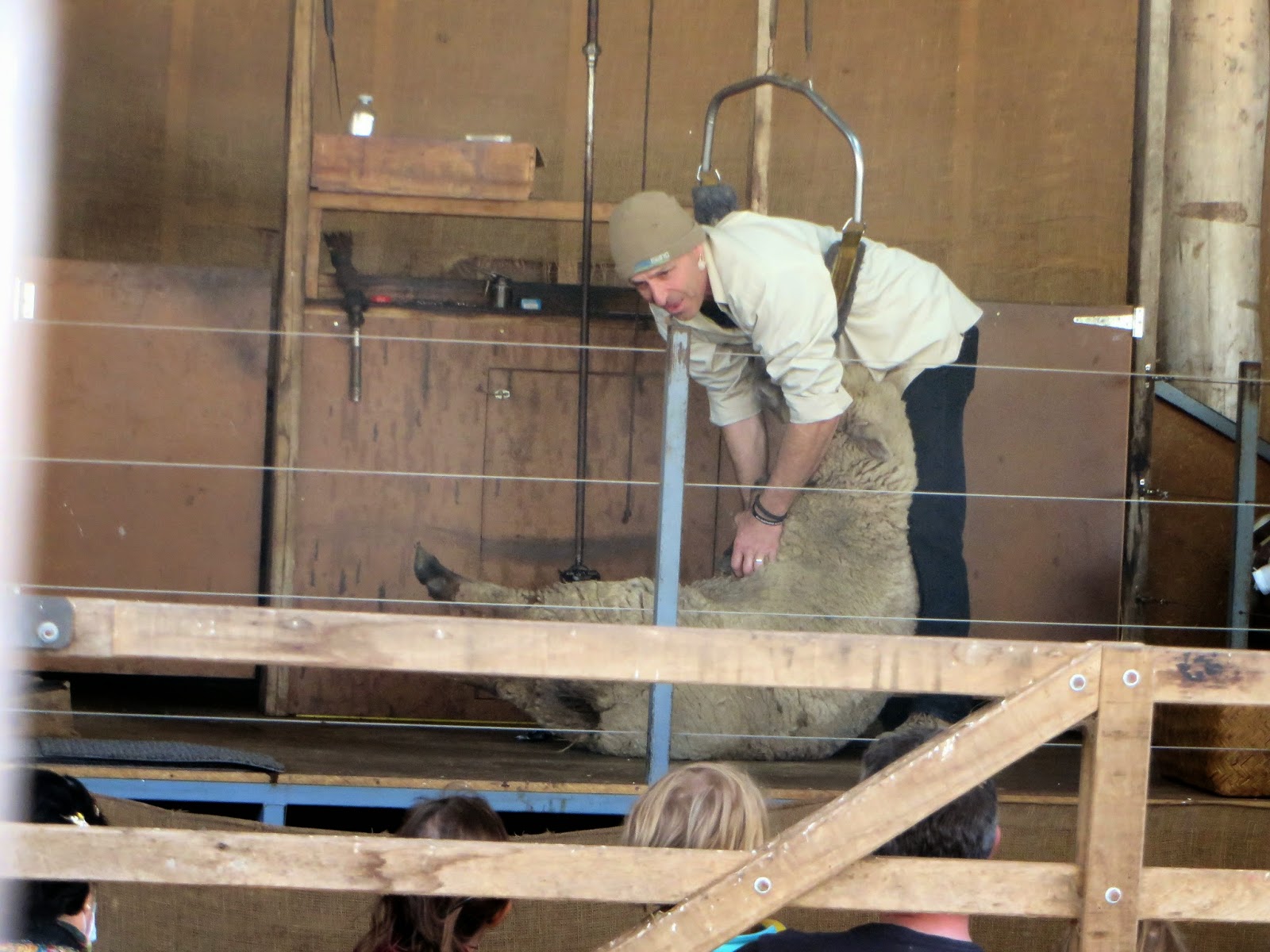
A range of activities including sheep shearing, cow milking, blacksmithing and working dog demonstrations run every day. To find out details  see the updated schedule.

Farm animals include this horse


There is a Visitor Centre on the Island which features an exhibition on the history of the island, a quality gift shop and a licensed cafĂ©.  You can enjoy a snack or lunch including a glass of wine and take in the breathtaking views of Western Port. 

Ticket prices are around $10 for an adult or you can purchase a 3 Park Pass and visit the Island along with the Koala Conservation Centre and end the day with the Penguin Parade. Further information and to purchase tickets

If you're interested in helping preserve the history of Churchill Island you can join the Friends of Churchill Island Group

The Island is also the site of a regular farmers market, normally the 4th Saturday of the month. See Market dates


Peacock wandering around the animal corrals

1 day Phillip Island Private Tour