Saturday, 14 December 2013

Canberra for free

One of the great things about visiting our nation's capital city - Canberra is the fact that many attractions are free.

Australian War Memorial


One of my favourites is the Australian War Memorial. Not as a celebration of war but because its a haunting reminder of the sacrifice people make in war time and a testament to the courage of the individuals and Australia as a nation.

Walking up the steps and into the Commemorative Area and seeing the Roll of Honour lined with poppies to remember the fallen is just the start of a the journey of understanding Australia's war history. 


I also particularly admire the tomb of an unknown solider as a sombre and reverent resting place for the remains of this unnamed soldier.  The remains were removed from a cemetery in France and transported back to Australia in 1993. 


You need to allow at least a day to be able to see all the exhibitions which include the First and Second World Wars as well as more recent conflicts.There are also range of special exhibitions in the Memorial; to find out current information see their Exhibitions page. 


The view along ANZAC Parade to Parliament House is also  a spectacular sight. 


The War Memorial is open 8.am. to 5 p.m. daily - closed Christmas Day.


Canberra Space Centre


Our children's favourite place in Canberra is the Space Centre located in Tidbinbilla which is about a 35 kilometre drive from the city.  


Here you can see the deep space antennas (Deep Space Stations) each identified by a number sequence relevant to their country of location. In Australia ours are numbered in the 30s and 40s. The antennas receive and transmit data to robotic spacecraft exploring our solar system - something I find fascinating. 


At the visitor centre displays include a 3.8 billion year old piece of the Moon, spacecraft models, space hardware and memorabilia including the foods astronauts eat, movies on space exploration and the latest images from across the solar system. 

We always take a picnic but the centre has a cafe. Open 9.am. to 5 p.m. daily - closed Christmas Day.


Parliament House


No visit to Canberra would be complete without visiting Parliament House where both Houses of Parliament sit. The design of Parliament House is impressive and positioning it on top of a hill overlooking Canberra makes sure it can be seen from many locations and is a constant reminder of the important business that is conducted within.
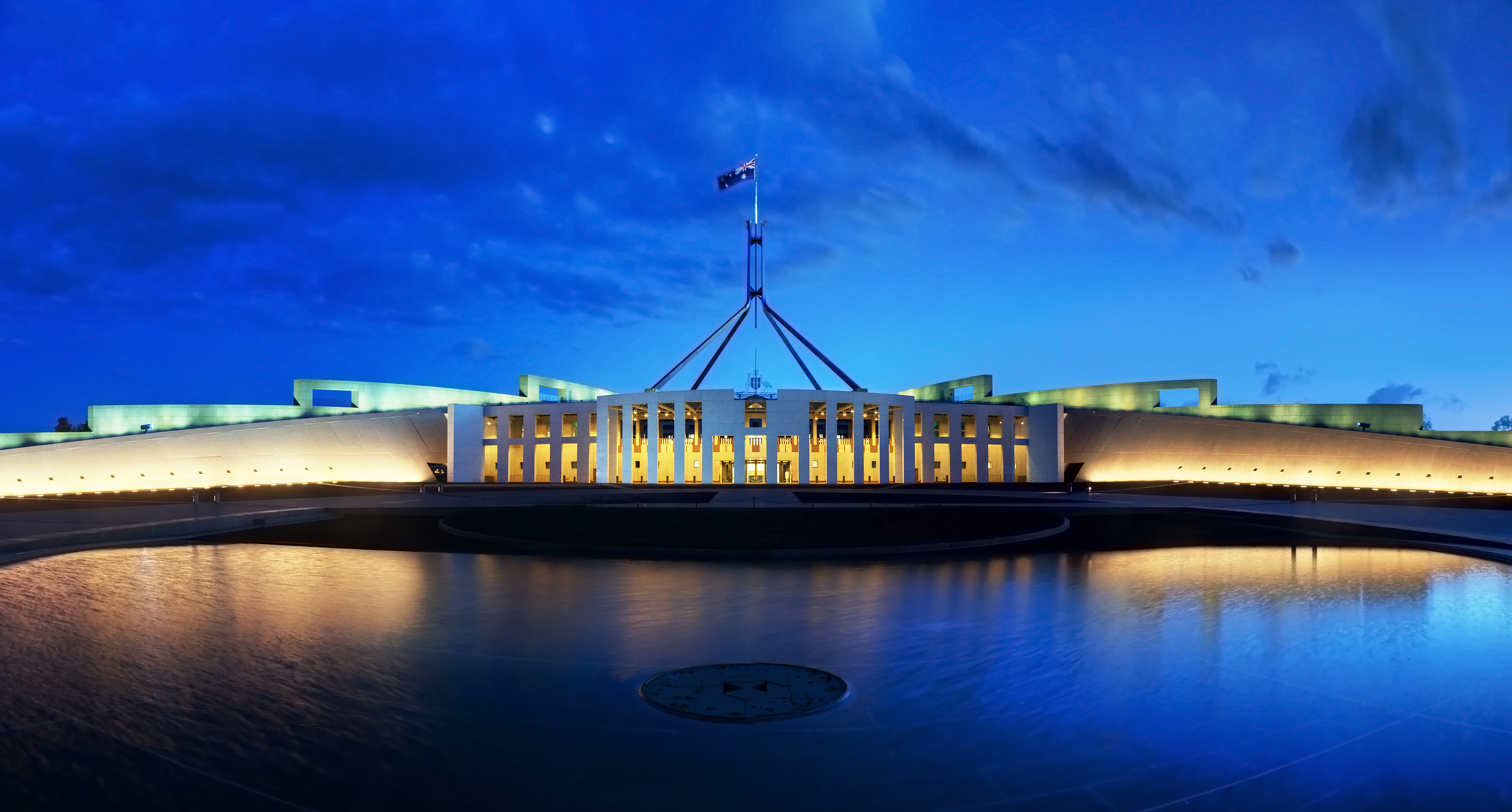


You can wander the public areas of Parliament House and see Parliament in action if your visit coincides with a sitting day. The impressive red chamber is where the Senate sits and shares the power to make laws with the House of Representatives.  Debating in the equally impressive green chamber is the House of Representatives. Here they debate, pass laws and watch over government administration and expenditure. You can also take a guided tour. 

The building itself is impressive and within its walls there is a stunning art collection which includes a very impressive tapestry which hangs in the Great Hall. The gardens and surrounds of Parliament House are also worthwhile exploring. 


The view from outside along ANZAC Parade to the National War Memorial is also  a spectacular sight and demonstrates how well designed or planned the location was. 


Opening hours vary on sitting days from 9.00 a.m. Monday and Tuesday and from 8.30 a.m. Wednesday and Thursday. When Parliament is not sitting its open from 9.a.m. to 5 p.m. Closed Christmas Day. 


Old Parliament House


Down the hill from Parliament House is Old Parliament House where Parliament sat from 1927 to 1988. The building now houses the Museum of Australian Democracy.  This Museum has displays that show Australia's social and political history through interpretation of the past and present and exploring the future.


For details of current exhibitions
Although not free entry is relatively cheap $2 for adults and $1 for children.
Open daily 9 a.m. to 5 p.m. Closed Christmas Day
On either side of the building are the Old Parliament House Gardens which are lovely to wander through. The Gardens include seating pavilions, pergolas, rose arbours and pathways.
The National Museum of Australia explores the land, nation and people of Australia. It focusses on Indigenous histories and cultures, histories of European settlement and their interaction with the environment.
You can wander the Museum at your leisure and there are a range of free Host talks throughout the day (check with the information desk on timing) or you can take a guided tour at a cost. 
Details of current Exhibitions 
The Museum is open every day from  9 a.m.-5 p.m. except for Christmas Day.
If art and culture interests you the National Gallery of Australia has a permanent collection of more than 160,000 works of art including Aboriginal and Torres Strait Islander art, Australian art and International art.


A range of special exhibitions constantly change see the exhibitions page for more information. 
Whilst entry to the Gallery is free special exhibitions will often come at a cost. Open daily from 10 a.m. to 5 p.m. 

National Portrait Gallery


Located just across the road from the National Gallery of Australia is the National Portrait Gallery.  The Gallery's purpose is to broaden the understanding of Australian people through portraits that display our identify, history, culture, creativity and diversity.

My favourite is a very compelling portrait of blind indigenous singer Geoffrey Gurrumul Yunupingu by Guy Maestri. This portrait also won the Archibald Prize in 2009.


For information on current exhibitions 


Open daily from 10 a.m. to 5 p.m. some special exhibitions will have entry fees.

Royal Australian Mint


For something completely different visit the Royal Australian Mint where all the coins in Australia are made.  Here you can wander the observation gallery to see how coins are produced, see the rare and significant coin collection or watch a behind the scenes video in the theatrette. You can even mint your own $1 coin.


Open Monday to Friday 8.30 a.m. to 5 p.m. Saturday Sunday and Public Holidays 10 a.m. to 4 p.m. closed Christmas Day and Good Friday. 


National Film and Sound Archive 

This is said to be Australia's living archive as it displays images and sound from film, television, radio and other recordings that reflect Australia's life stories and place in the world.

The Archive includes a range of sound and film galleries and regular presentations. Find out more about current exhibitions.

Open daily from 9 a.m. to 5 p.m. weekdays and 10 a.m. to 5 p.m. on weekends.

Australian National Botanical Gardens

The Australian National Botanical Gardens are located on the lower slopes of Black Mountain in Canberra. Established as a place for recreation and learning the gardens have the world's most comprehensive display of Australian native plants. 


Displays include the Red Centre Garden which has plants such as majestic desert oaks, ghost gums and spinifex grasslands.


Entry to the Gardens are free. They are open daily from 8.30 a.m. to 5 p.m. (8 p.m. week days in summer) closed Christmas day.  


Telstra Tower


If you're looking for great view of Canberra go to the Telstra Tower on Black Mountain. The tower stands 195 meters tall and has stunning 360 degree views of Canberra and surrounding areas.


You can also enjoy a coffee or snack at the cafe located at the Tower which is open 365 days a year from 9 a.m.

Embassies


Another great free attraction in Canberra is take a drive around the Embassies. Many buildings reflect the culture of the Countries they represent.

National Carillion


The National Carillon located on Aspen Island in Lake Burley Griffin was a gift from the British Government. The Carillion stands 50 metres and is a musical instrument with 55 bronze bells.

You can hear recitals Wednesday and Sundays 12.30 to 1.20 p.m.


Entry is free.


Parks and Recreation


There are a range of parks in and around Canberra where you can walk, cycle or just relax and enjoy nature.

There are self guided walks, Ranger guided walks and of course you can also relax and enjoy Lake Burley Griffin which Canberra is built around. The Lake is also a site for many Canberra celebrations including Fireworks on Australia Day (26 January).

Saturday, 9 November 2013

Brisbane for free

Brisbane is the capital city of Queensland and another fantastic city to visit and the weather makes it possible to enjoy activities pretty much all year round.

The city is located alongside the Brisbane River and there are walkways that follow the river that you can wander along and enjoy the cafes, restaurants and river views. 


City Botanical Gardens

The walkways continue through to the City Botanical Gardens located at Gardens Point. The gardens were opened in 1855 and were the cities original botanical gardens. Prior to that time the site was a botanical reserve established to provide food for the penal colony.


Entry to the gardens is free and you can wander around for hours as there are a range of sculptures, gardens and ponds to see.  These include the Bamboo Garden and  Weeping Fig Avenue. Sitting at a spot along the river is also a peaceful way to spend some time relaxing and watching as boats and joggers pass by.

The gardens are open 24 hours, with pathways lit at night.

Mount Coot-tha Gardens

Another free option if you like gardens is the Brisbane Botanic Gardens at Mount Coot-tha. The gardens are located at Toowong a short distance from the city. 

Spanning 52 hectares the gardens are recognised as Queensland's pre-eminent collection of native and exotic plants.  Included in the collection is a bamboo grove, Japanese Garden including Bonsai House, scented garden, arid zone, waterfalls and rainforest trees. 

Opening hours vary depending on the season - September to March 8 a.m. to 5.30 p.m. and from April to August 8 a.m. to 5 p.m.


South Bank

South Bank parklands are an amazing asset for Brisbane city. From the water play areas and Streets Beach to a bougainvillea-covered Arbour and cobbled laneways the area attracts young and old. Many of the attractions are free and people often bring a picnic and spend the day. You can choose from the wide range of restaurants, cafes and eateries that cater for every taste.

A range of events and markets are held at South Bank so don't forget to check out their events calendar as you may find something of interest.


Queensland Gallery of Modern Art

If you're interested in art the Queensland Art Gallery|Gallery of Modern Art have significant collections of more than 15,000 Australian and international paintings, sculptures, art objects and installations.

The collections includes Indigenous art, art depicting Queensland's history, contemporary Australian and Asian art through to International art including Picasso.

The Galleries are located on the South Bank of the Brisbane River. Both buildings can be entered via Stanley Place and are only 150 metres apart. 

Entry to the galleries are free but you may have to pay for some of the special exhibitions.


Queensland Museum

The  Queensland Museum located at South Bank is a museum of natural history, cultural heritage and human endeavour. It tells the story of a changing Queensland. 

The Museum has a range of permanent exhibitions including ENERGEX Playasaurus Place and the story of 3 Victoria Cross recipients titled the Courage of Ordinary Men. A program of regularly changing exhibitions ensures the Museum continually interests and educates across a broad range of topics.

Open daily from 9.30 a.m. - 5.00 p.m. The Museum is closed on Good Friday, Christmas Day and  Boxing Day. Open ANZAC Day from 1.30 pm. General entry to the Museum is free. You may have to pay for some special exhibitions.


Free guided walks

If you're interested in a  free guided walk around the city they're offered week days at 12 p.m. starting from the Brisbane Visitor Information Centre. The walk includes visits to City Hall, Treasury Casino, the Old State Library, Brisbane's Botanical Garden and the Brisbane Club.

Free transport


The city provides free transport via a high frequency bus which loops around the Brisbane CBD and Spring Hill area.  Bus route

Brisbane Library - free internet

The Brisbane library offers a range of services include free internet.  The Brisbane Square Library is located at 266 George Street in central Brisbane.  The library is closed on public holidays. Opening hours Monday to Thursday are 9 a.m. - 6 p.m. Friday 9 a.m. to 7 p.m. and Saturday and Sundays from 10 a.m. to 3 p.m.


Friday, 23 August 2013

A road less travelled .. Part 5 .... Birdsville to Bourke via Innamincka

Leaving Birdsville the next morning we headed to Innaminka; a journey of 420 kilometres which would take us around 7 hours. Our first stop was only a short distance from Birdsville at one of the Burke and Wills slash trees - a reminder of their historical journey and the site of their last camp before entering the Innamincka area. 


In 1860 - 61 Burke and Wills  led an expedition which intended to travel 3,250 kilometres across Australia south from Melbourne to the Gulf of Carpentaria in the north.   This was an ill fated journey as they both died near Cooper Creek in June 1861. To find out more search Dig a Burke & Wills research gateway.

Next stop was Cadelga Station;  once a thriving station its now in ruins and forms part of Cordillo Downs.


Next stop was Cordillo Downs Station.  This station once ran around 85,000 sheep and shearers would make the 4.5 hour journey on bicycles to work at what was the largest wool shed at the time. The owners continually struggled with drought and dingoes and in the seventies after dingoes killed virtually every lamb they moved to running cattle. 


The shed is a heritage listed monument to bygone days

We arrived in Innamincka late afternoon looking forward to exploring the surrounding area and in particular seeing more of the sights connected with the Burke and Wills expedition. There are 2 trains of thought regarding this expedition one regards them as great explorers who ran out of luck whilst the other regards Burke as "a bit of a boffin" and a political appointment ill equipped to head such an expedition.

Whichever you believe the fact remains to make a journey of that scale in those times is an incredible feat of endurance. The fact that they missed their support members by a matter of hours is just another disastrous event that affected them.

From Innamincka you can visit "the Dig Tree" where their support crew left supplies for them. Burke's grave site along with Wills are easily accessible as is the site where the rescue team found King the sole survivor in very poor health.  

The Australian Inland Mission Building at Innamincka houses a fantastic display of the history of the mission and many other facts about the history of the surrounding area.

Of course a visit to the Innamincka Hotel is also a must. The bar is full of interesting trinkets left by previous travellers and we had an amazing dinner before retiring back to camp along the Strezlecki Creek.


The creek is currently dry but last time Garry camped at its edge heavy rain turned it into a raging force during the night. This made for an emergency dash back to Innamincka with the water coming up over the bonnet of our Defender when they crossed the creek.


The next morning we followed dingo tracks on the creek bed until we reach Cooper Creek. The Cooper's many channels spread out across a vast area stretching from Queensland to South Australia. Many of these are dry most of the time but when the rains fall its waters flow into Lake Eyre.


Today we were lucky to see a number of pelicans enjoying feeding on the fish within the waters of the Cooper.

After breakfast the next day we were on our way again, this time heading to a couple of outback Queensland towns made famous in poems and songs. We stayed at Thargomindah and then travelled through Cunnamulla, the home of the Cunnamulla fella, and then onto Bourke. Along the way we saw many emus, kangaroos and wedgetail eagles. 

Bourke is said by many to be the gateway to the real outback and this is encapsulated by the saying "back o'Bourke".  The information centre houses an amazing Back o' Bourke show spanning 3 buildings each complex telling elements of the history of the area. 


The next day we returned to see the outback show which was fantastic and lots of fun. It was basically a one man show with authentic bush poetry and demonstrations of how camels, horses, dogs and bullocks were used. 


If you ever get out that way we'd recommend taking the time to see visit both the displays and the shows. Bourke also has a number of other attractions which unfortunately we didn't have time to explore.


Saturday, 17 August 2013

A road less travelled .... Part 4 .... Mungarannie to Birdsville

Leaving Mungarannie we continued along the Birdsville track and stopped at the Mirra Mitta bore which is still free flowing and can be seen in the distance from the steam that rises from the water. 


There are signs warning travellers that the water is hot and its interesting to see the vegetation that grows on the other side of the bore.

From there we drove through a range of landscapes from stony desert to rolling sand dunes. We stopped to shield a mother cow and her calf from a pack of dingoes who appeared to be tracking the newly born calf - another indication of how harsh an environment we are travelling in.

Arriving in Birdsville we checked into the camp-ground and wandered across the bakery which we'd been hearing lots about from other travellers along the way. Garry had one of the best pies he'd ever had; a rabbit pie so their reputation was confirmed!

Waking up in Birdsville with brilliant clear blue skies and sunshine signals the start of a great day so we enjoy a quick breakfast and head to the Simpson Desert to tackle "Big Red" the largest and last sand dune on the Birdsville side of the desert.

Most people waiting at the edge of the desert are just there to look and Garry recalls when it was a right of passage for everyone who visited to at least have a go - maybe its a factor of the amount of "grey nomads" now travelling broader a field than ever before.


 From on top of big red looking back to the road to Birdsfield


Early morning in the desert animal tracks are visible


From the top of "Big Red" we get some magnificent photos of the surrounding area - this is where the blue of the sky and the red desert sands are clearly evident. 

After our brief visit into the desert we head to an Aboriginal site to learn about   Thutirla Pula—the  story of “Two Boys”. Its an epic tale that links Dalhousie Springs on the western side of the desert with Birdsville. We wander the walking trail and have a chance to learn the story and see the ceremonial sites. 

We also headed out towards Bedourie where there is a stand of ancient Waddi Trees. These trees are very rare with only a few stands existing on the fringe of the Simpson desert. They grow to about 9 - 10 metres high and can be as old as 1,000 years.  The wood is extremely hard and many an axe handle has met its end when used on them. 


We enjoyed dinner at the famous Birdsville Hotel  visit the local cemetery and recognise some of the names from photos we've seen in the famous Birdsville Hotel and also drive by the Birdsville Racecourse before leaving Birdsville and heading towards Innaminka.


The Birdsville Races are held each year and transform this tiny outback town as more than 6,500 people arrive to enjoy the short racing season.

Come tour with us. 


Friday, 16 August 2013

A road less travelled ..... Part 3 ..... Maree to Mungarannie

Had a great night's sleep and started the day reading about Tom Kruse (no, not the actor) the original outback mail-man and a deadset Aussie hero and icon. 


Tom's mail truck on display in Marree

Tom delivered mail and other supplies including fuel and medicine to remote stations from Maree in outback South Australia to Birdsville in outback Queensland. This was a journey of  523 kilometres (325 miles) over roads that were little more than a track including sand dunes. The trip 2 weeks and Tom regularly had to manage break-downs, flooding creeks and rivers, and getting bogged in desert dunes. The documentary Last mail from Birdsville tells the story of Tom.

From Maree we set off up the Birdsville Track. The track was originally a stock route where stockman drove sheep and cattle from stations along the track to Maree and onto Adelaide to market.


Road condition signs are important to check before travelling on outback roads

This is a beautiful but harsh part of Australia and the struggles of the early settlers are evident as we travel along the track and come across ruins. The first just 30 kilometres up the track are the remnants of an old date palm plantation. 


The date palms were planted in 1895 and florished for a little while but as there were no insects around that could pollinate the flowers hand-pollinatation was the only option.  This led to poor crops and then drought and large flocks of birds devastated the crops the plantation was eventually abandoned. 

Another 25 kilometres up the track we stopped at Clayton Station where we had the opportunity to enjoy a spa filled with hot artesian water. It was an amazing experience to sit enjoying the healthy warm waters in the middle of nowhere.


There are camping sites and toilets available where the spa is located but there is also luxury accommodation available at Clayton Station.

Completely relaxed we ventured further along the Birdsville Tack to the old Mulka store ruins. This store and the station it is on have a wonderful history. 


2 children are buried out the back of the ruins both died from pneumonia a simple illness nowadays to cure but in days gone by and in such a remote location it was often a death sentence.


From Mulka we drove onto Mungarannie where we camped in amongst the trees which lined an amazing wetland created by water from the artesian basin. The tranquillity and bird-life were amazing. 


It was also great to be able to have a hot shower, use a clean toilet and enjoy a drink at the Mungarannie Hotel.


The pub had lots of character, the locals were very friendly and we certainly felt welcomed. We wandered back to camp and lit a fire and settled in to enjoy a home cooked meal. 

The Galahs made sure no one needed an alarm clock waking us up bright an early to enjoy sunrise over the wetlands. Its amazing to realise the other side of the wetlands is desert but sand dunes are easily seen in the morning light.


Come tour with us.

Friday, 2 August 2013

A road less travelled .... Part 2 ..... Flinders Ranges to Marree


Today we are heading for Marree where the Oodnadatta track and the Birdsville Track meet. On the way out of the Flinders Ranges we drive through Bunaroo Gorge and Brachina Gorge.  These two gorges are fantastic examples of what nature can create if she is given enough time.


Over periods of time ranging to 600 million years ago this ancient mountain range has weathered away to leave us with some of the most magnificent scenery.The gorges and valleys are just beautiful and its hard to find the words to describe them. 


Fossils of sea creatures exist in the rock face as evidence of when this area was a sea bed.  We stopped at one of our regular spots and were incredibly lucky to be rewarded with a sighting of a yellow footed rock wallaby as he tried to hide from us on the rock face. 

Once out of the gorges we hit the bitumen and drove into Parachilna and stopped at the Prarie  Hotel for  a welcome drink. This quirky pub advertises road kill (kangaroo, wallaby and emu) on the menu!

Our next stop was Leigh Creek where we refuelled then travelled towards Lyndhurst where we planned to visit Talc Alf. Alf is an artist who specialises in carving talc stone. His works are unique and some are for sale. He is an amazing person with a wonderful philosophy on life and it would be easy to spend lots of time listening but we need to move on.


We stop at the Ochre Pits on the way and are amazed at the colours in the cliff face. The site is significant as the ochre was traded with Indigenous people from great distances for many different items. 


Next we stop at the ruins of a town called Farina. When you see the ruins its hard to believe this town was still around in 1950. Certainly makes you realise what time and the harsh outback conditions can do.


Its great to see it taking shape as a tourist attraction with great information boards and a good camp area with toilets and showers. 

From Farina Station we head to Marree and set up camp just in time to enjoy a stunning sunset and head to the hotel to enjoy a lovely meal and chat with some of the locals.


Stay tuned for more....

Monday, 29 July 2013

A road less travelled - Melbourne to Flinders Ranges

I'm sitting in the sunshine at Wilpena Pound in the Flinders Ranges. It's 11 a.m. and Shirley and I are in day 3 of another of our outback adventures.

Day 1 was spent travelling from Melbourne to Waikerie in South Australia. Victorian farmland in this area is lovely and green normally at this time of the year, but it was really sad to see so many fields with very little crop growing and hardly any dams anywhere near full.

Farmers really do need all the help we can give them as they are the lifeblood of the country.


By the way if you don't know already when crossing into SA you need to dispose of any fruit so disease isn't spread across borders. Your car will be checked at the checkpoint once in SA.

Waikerie is situated along the mighty Murray River and is a timely spot to stop for the night. it is home to Nippys who make some of the best orange juice, iced coffee and ginger beer around and we stocked up on each for our trip.

Day 2 and it was a cold start to the day as we hit the road again with our destination this afternoon Wilpena Pound Resort. We drive through orange and mandarin groves and vine country then the rolling hills of the SA countryside and of course it pays to stop at roadside stores to pick up fresh mandarins and dried apricots to have as "munchies".

We cross the Murray River via ferry at Cadell. This service runs day and night and is fun to experience and probably less expensive than trying to span the river with bridges at every town.


Next we pass through the town of Morgan and onto Burra and a number of other towns it seems time has forgotten. One of the most telling examples is Terowie where we turn off to head to Peterborough. This town has lots of beautiful old buildings that it seems people have just packed up and abandoned as the town drops off the map.

Driving through we only saw 2 people, a mother and child, who were only too happy to give us a cheerful wave. 

A short drive takes us to Peterborough a fantastic town with magnificent stone buildings. Their Town Hall is heritage listed and claimed to be the largest Town Hall in Counrty South Australia. This town has a history with the Southern Pacific Railway and is still on the train line from Adelaide to Broken Hill and Sydney.

Continuing on the road we come to the town of Orroroo and its amazing sculptures. We turned onto RM Williams way and headed to Hawker. On the way we passed through several one pub towns. The one that sticks out is always Craddock where the old stone pub always looks inviting. We keep saying we will stop there for refreshments but alas we never do and I think we are poorer for not allowing time for it.

Turning off at Hawker we head into the Flinders Ranges and onto Wilpena Pound where we will camp for 2 nights and relax around a welcoming camp fire.


More to follow.....